Katja Hoffmann · 18 September 2026
Precision Optics for Capturing Thermal Gradients During Live Culinary Demonstrations
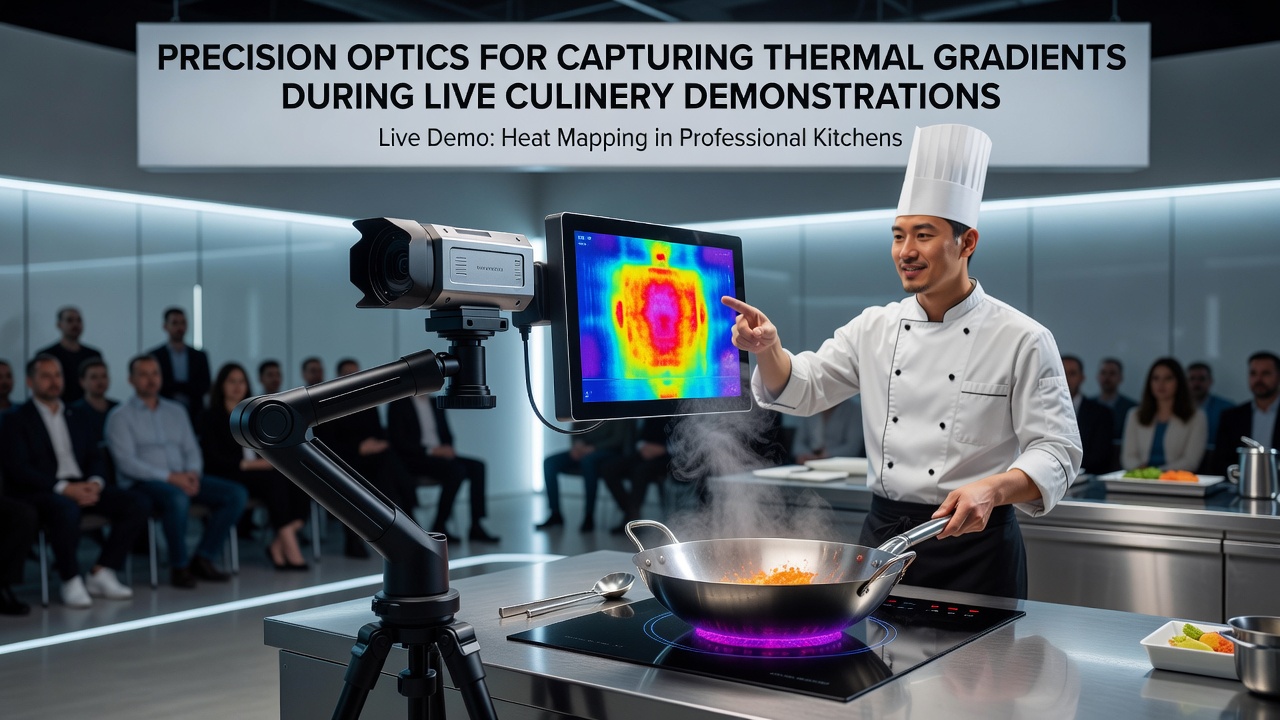
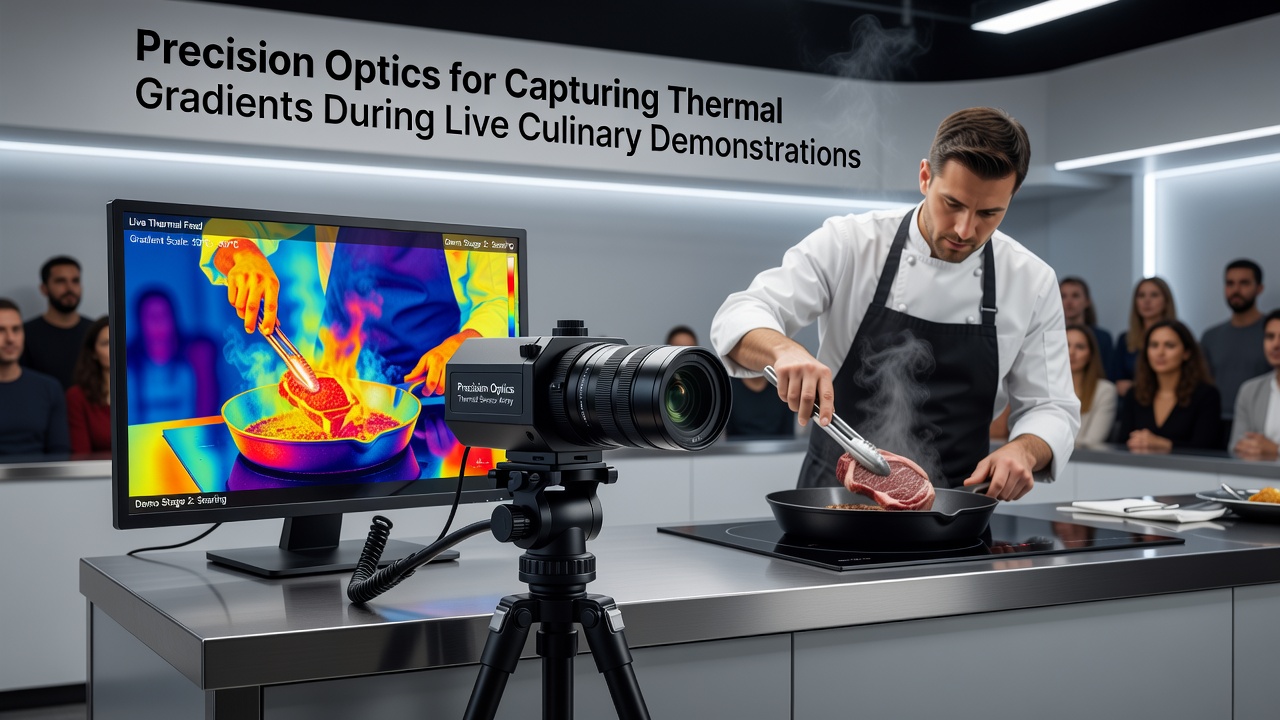
Precision optics designed for thermal gradient capture combine specialized infrared lenses with high-sensitivity detectors that translate minute temperature differences into visible data streams, and these systems allow audiences at live culinary demonstrations to observe heat flow patterns across pans, proteins, and sauces in real time. Engineers calibrate the optics to operate across narrow spectral bands that minimize interference from visible light sources commonly used on demonstration stages, while maintaining spatial resolution sufficient to distinguish temperature variations as small as 0.1 degrees Celsius. Data streams feed directly into projection systems or augmented-reality overlays so viewers see both the physical cooking action and the corresponding thermal map without delay.
Core Components of Thermal Optics Systems
Modern setups integrate germanium or chalcogenide lenses that transmit long-wave infrared radiation efficiently, and these materials resist thermal expansion that would otherwise distort measurements during extended demonstrations lasting several hours. Detector arrays based on uncooled microbolometer technology reduce power requirements and eliminate the need for cryogenic cooling, which simplifies transport between event venues. Onboard processors apply real-time nonuniformity corrections and atmospheric compensation algorithms that maintain accuracy when ambient humidity or stage lighting changes, and manufacturers publish calibration certificates traceable to standards maintained by the National Institute of Standards and Technology.
Integration With Live Demonstration Workflows
Event producers mount overhead gimbals or side-mounted rigs that keep optics clear of chef movement yet provide unobstructed views of cookware interiors, and wireless transmission protocols send uncompressed thermal frames to control rooms where technicians merge them with conventional video feeds. Chefs receive haptic or visual cues from the system that indicate when surface temperatures reach target thresholds for searing or emulsification, and audience members follow the same data through secondary displays that label specific gradient zones. Training sessions held before events familiarize kitchen staff with the equipment so camera positioning does not interfere with ingredient placement or utensil handling.
Applications in Food Safety and Technique Analysis
Thermal gradient mapping reveals hot spots that form along pan edges during high-heat techniques, and organizers use these maps to adjust burner placement or induction settings before demonstrations begin. Food safety inspectors attending public events have referenced similar imaging data when verifying that held products remain above required internal temperatures, and research groups at the Commonwealth Scientific and Industrial Research Organisation have documented how such optics assist in studying cooling rates after cooking completes. Demonstrations focused on molecular gastronomy employ the same tools to confirm that liquid nitrogen or sous-vide baths achieve uniform thermal profiles across multiple batches.
September 2026 schedules list multiple international food technology expos where vendors will demonstrate next-generation optics with improved frame rates exceeding 60 hertz, and these upgrades reduce motion blur when chefs rapidly move ingredients across griddles. Comparative studies presented at those gatherings will reference earlier trials conducted in European test kitchens that measured consistency improvements when thermal feedback loops guided timing decisions.
Calibration and Data Accuracy Standards
Operators perform blackbody calibrations at the start of each demonstration day using portable reference sources traceable to national metrology institutes, and they repeat spot checks between sessions to account for lens temperature drift. Software interfaces log every correction factor so post-event analysis can reconstruct exact measurement conditions, and peer-reviewed papers published through optics societies detail uncertainty budgets that remain below 2 percent across typical culinary temperature ranges. Venue technicians also verify emissivity settings against known surface finishes of stainless steel, cast iron, and ceramic cookware to prevent systematic errors in displayed gradients.
Future Developments and Event Planning
Compact multispectral units under development combine visible and infrared channels in a single housing, and these designs reduce the number of separate rigs required on crowded demonstration counters. Software vendors are releasing plug-ins that automatically generate thermal contour lines for projection, and event coordinators report simplified cueing when multiple camera angles must switch during complex plating sequences. Industry forecasts presented at the 2026 expos will include adoption metrics from demonstration circuits in North America and Asia that already rely on precision thermal optics for both educational and competitive formats.
Conclusion
Precision optics for thermal gradient capture have become standard equipment at live culinary demonstrations because they convert invisible heat patterns into actionable visual information that chefs, safety personnel, and audiences can interpret simultaneously. Continued refinement of lens materials, detector sensitivity, and integration protocols supports broader deployment across regional food festivals and professional training programs scheduled through late 2026 and beyond.