Carlo Zimmermann · 30 October 2026
Heat Flow Visualization in Traditional Chipotle Smoking Reveals Distinct Thermal Patterns
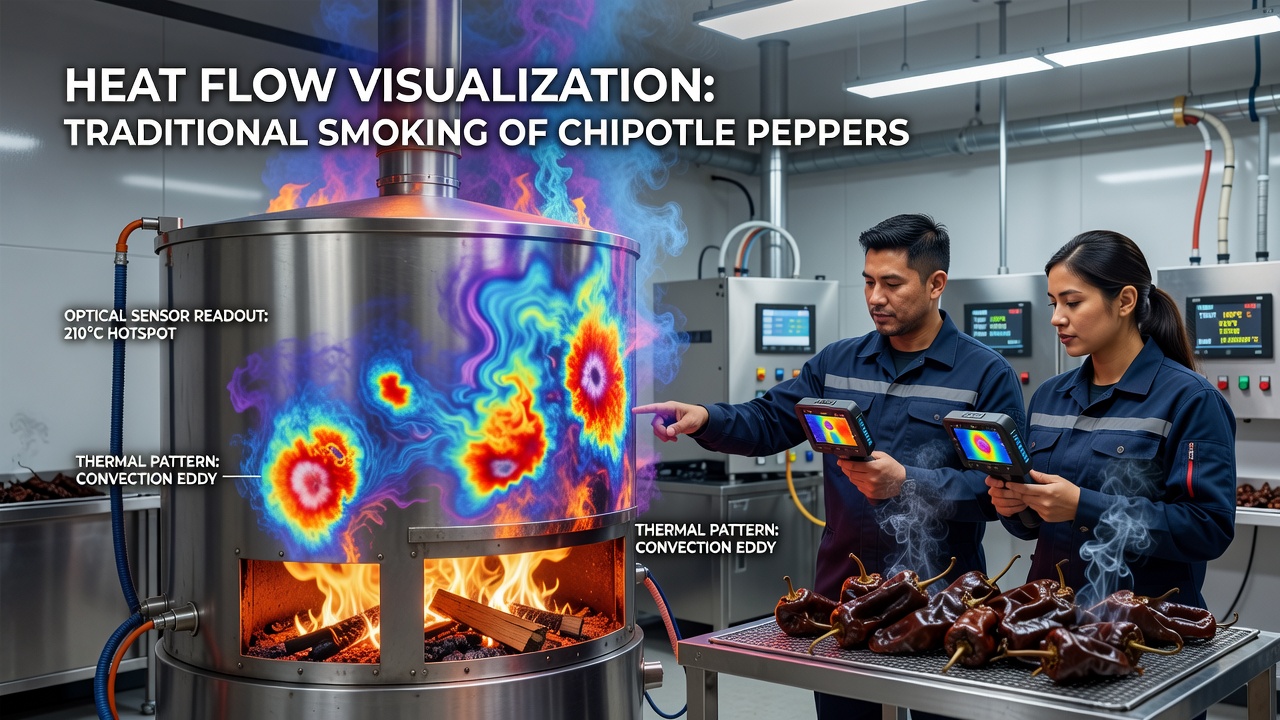
Traditional smoking techniques convert fresh jalapeños into chipotles through controlled exposure to wood smoke over several days, and heat flow visualization has become a standard monitoring practice in facilities that use infrared optics to track temperature gradients inside the chambers. Equipment operators rely on these specialized optical sensors to capture real-time data on how heat moves through the pepper batches, which helps maintain consistent drying rates while preventing overheating that could alter flavor compounds or texture. Studies from food processing research centers show that thermal patterns vary based on wood type, chamber design, and pepper arrangement, with hotter zones often forming near the smoke inlet and cooler pockets developing along the chamber walls.
The Smoking Process and Sensor Integration
Chipotle production starts with ripe jalapeños that undergo washing and sorting before placement on racks inside masonry or metal smoking rooms, where smoldering fruit wood generates the smoke and heat needed for dehydration. Operators position infrared cameras and thermal imaging arrays at multiple angles so that heat flow data streams continuously to control panels, allowing adjustments to airflow dampers or wood feed rates when patterns deviate from established baselines. Data collected across multiple production cycles indicates that uniform heat distribution correlates with even moisture reduction, while localized spikes above 80 degrees Celsius can lead to surface blistering on the peppers.
Observed Thermal Patterns During Operation
Thermal imaging records show that initial smoke introduction creates rising heat columns that spread outward in layered waves, with the densest concentrations settling around the central racks before diffusing toward the exhaust vents. Operators monitor these patterns closely because certain arrangements produce circular hotspots at the base of the chamber that migrate upward over the first twelve hours, and sensor alerts trigger when those zones exceed safe thresholds. Research indicates that rotating rack positions midway through the cycle redistributes heat more evenly, reducing the time required for complete dehydration by up to twenty percent in controlled trials.
Equipment and Monitoring Protocols
Specialized optical sensors used in these facilities include long-wave infrared cameras calibrated for high-humidity environments plus multispectral units that combine visible and thermal channels for better contrast on pepper surfaces. Calibration occurs daily against reference blackbodies, and operators log sensor readings at fifteen-minute intervals during active smoking phases. Figures from industry reports reveal that facilities adopting continuous visualization systems report fewer batch rejections compared with those relying solely on manual temperature probes, because the optical data captures spatial variations that point sensors miss.
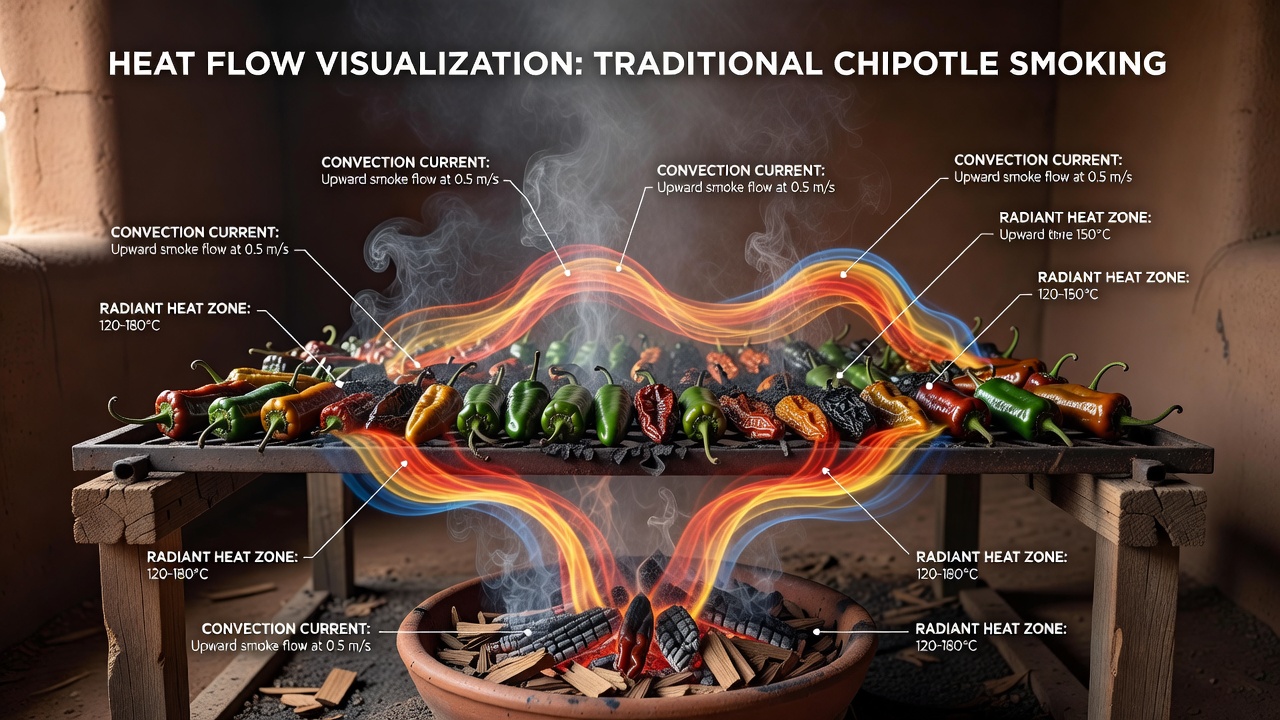
Maintenance routines for the optical equipment involve lens cleaning to remove smoke residue and periodic verification of emissivity settings to match the changing surface properties of drying peppers. In October 2026 several processing plants in northern Mexico upgraded their sensor arrays to include automated pattern-recognition software that flags anomalies within seconds of detection.
Regional Practices and Data Sources
Facilities in the central highlands of Mexico continue to blend traditional masonry chambers with modern sensor overlays, whereas operations in the southwestern United States incorporate modular steel units designed for easier camera mounting. According to information published by the United States Department of Agriculture, thermal monitoring protocols align with broader food safety guidelines that emphasize consistent temperature control throughout dehydration. A separate analysis from Agriculture and Agri-Food Canada examined cross-border supply chains and noted that standardized visualization practices improve traceability records for exported chipotle batches.
Conclusion
Heat flow visualization through specialized optical sensors has integrated into traditional chipotle smoking workflows by providing spatial temperature data that guides precise adjustments during the multi-day process. Operators track distinct thermal patterns to sustain uniform dehydration while preserving the smoke-derived characteristics that define the final product. Continued refinement of these monitoring techniques supports consistent output across different production scales and regional setups.